
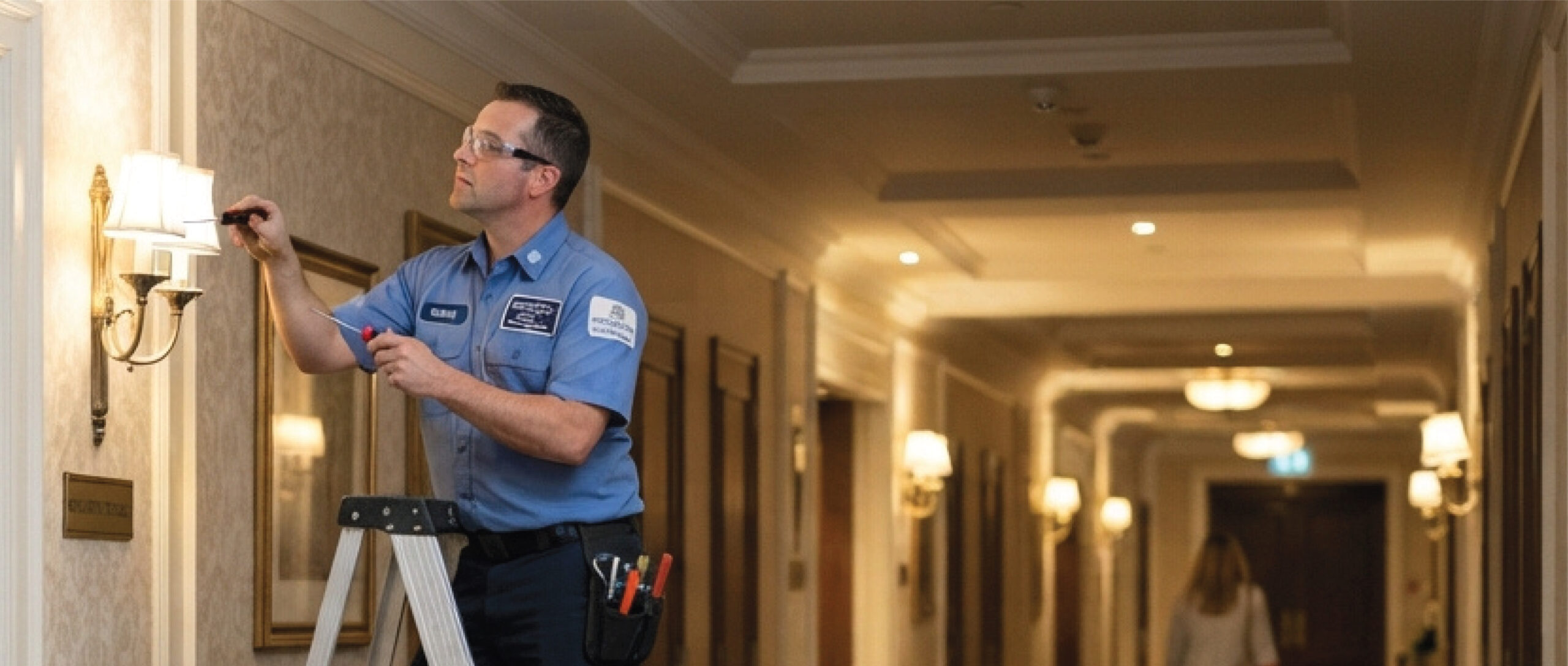
Ladders are used every day across real estate and hospitality operations—from changing lightbulbs and maintaining equipment to decorating common areas and accessing storage. These routine tasks can create serious fall hazards for maintenance teams, housekeeping staff, engineers, and other employees. Consistent ladder safety practices help protect employees while keeping properties safe for residents, guests, and visitors.
Safe use begins with selecting the right ladder for the task and inspecting it before every use. Damaged or unstable equipment should be removed from service immediately. Ladders should be placed on firm, level surfaces, with surrounding obstacles cleared and work areas secured, particularly in occupied spaces such as lobbies, corridors, and guest areas. Employees should consider weather conditions and electrical hazards, wear appropriate footwear, maintain three points of contact when climbing or descending, and avoid overreaching or repositioning a ladder while standing on it.
Property and hospitality managers play an essential role in making these practices part of everyday operations. Employees should receive training before using ladders, supported by annual refreshers, clear expectations, and accessible safety checklists. After each task, ladders should be returned to designated storage areas and secured against falling or unauthorized use. Encouraging employees to report damaged equipment and speak up about unsafe practices helps build a stronger safety culture across the property.
November Real Estate Safety Calendar
November Real Estate Narrative
November Hospitality and Leisure Safety Calendar
November Hospitality and Leisure Narrative
Disclaimer
The information contained herein is provided for information purposes only is not intended to constitute legal, medical or other professional advice and should not be relied upon in lieu of consultation with your own legal and/or other professional advisors. Some of the information, examples and suggestions presented in this material may be compiled by third party sources we consider to be reliable, however we do not guarantee and are not responsible for the accuracy of such information. We assume no duty in contract, tort, or otherwise in connection with this publication and expressly disclaim, to the fullest extent permitted by law, any liability in connection with this publication. Verist Inc. does not undertake to update the information included herein after the date of publication. Accordingly, readers should be aware that certain content may have changed since the date of this publication.